

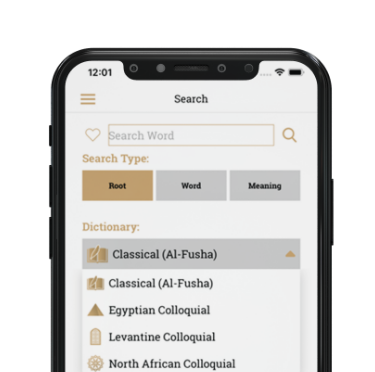
Want to take The Living Arabic Project's dictionaries wherever you go? Download the mobile app Lughatuna! It costs a little bit, but purchasing it supports the project so more cool dictionaries and new features can be added.


This site is always growing. What started out as a simple word list on a student’s desktop has evolved into two of the largest dialect dictionaries ever written for the Egyptian and Levantine dialects with plans for additional dialects and a growing Classical Arabic (Fusha) dictionary, all run on a uniquely structured database designed for Arabic’s diglossia. To make it practical and accessible, there are apps and learning resources appropriate for all levels of users.
Never use the "Check for Updates" function in the VCDS software on a cloned cable, as this will likely "deactivate" or brick the interface.
This guide is for understanding the technical process , not for piracy.
: Users can reflash their device to change or add support for different languages beyond the original factory setting.
Unlike modern CAN-bus interfaces that rely on hardware transceivers for speed, K-Line interfaces rely heavily on the microcontroller’s firmware for timing. When Ross-Tech updates the VCDS software, they often optimize the communication handshaking. If the firmware on the ATmega162 is outdated (e.g., an older revision like 1.9x or 1.8x), the timing discrepancies between the software expectations and the hardware execution can result in communication errors or the cable being flagged as "unlicensed" or "counterfeit." Reflashing updates this logic, essentially teaching the old hardware the new language required by the diagnostic suite.
Ross-Tech invests significant effort in developing and securing their firmware. The ATmega162's lock bits and cryptographic handshakes are designed to prevent:
: To prevent future deactivation, these cables are often used with a "Loader" (e.g., Kolimer or VCDSLoader ) that patches the software to ignore hardware verification. Common Recovery Steps
Arabic is hard and complex, but also rich and deep. Imagine learning tools that map out Arabic for you and help you learn it. That’s what this site is. It has dictionaries for Egyptian, Levantine, and Classical Arabic, and it has apps and learning resources to help you access the language.
These dictionaries are more than just a list of words, they are guides to the Arabic language. The uniquely structured database allows users to search by Arabic word, English word, and Arabic root. There are also thousands of examples to show users how to properly use words and listing common phrases and proverbs.
Never use the "Check for Updates" function in the VCDS software on a cloned cable, as this will likely "deactivate" or brick the interface.
This guide is for understanding the technical process , not for piracy.
: Users can reflash their device to change or add support for different languages beyond the original factory setting.
Unlike modern CAN-bus interfaces that rely on hardware transceivers for speed, K-Line interfaces rely heavily on the microcontroller’s firmware for timing. When Ross-Tech updates the VCDS software, they often optimize the communication handshaking. If the firmware on the ATmega162 is outdated (e.g., an older revision like 1.9x or 1.8x), the timing discrepancies between the software expectations and the hardware execution can result in communication errors or the cable being flagged as "unlicensed" or "counterfeit." Reflashing updates this logic, essentially teaching the old hardware the new language required by the diagnostic suite.
Ross-Tech invests significant effort in developing and securing their firmware. The ATmega162's lock bits and cryptographic handshakes are designed to prevent:
: To prevent future deactivation, these cables are often used with a "Loader" (e.g., Kolimer or VCDSLoader ) that patches the software to ignore hardware verification. Common Recovery Steps
Do you have questions or comments?
Feel free to reach out through Contact us page.
